Sunday, 3 September 2017

Character Analysis

PROTAGONIST:

Zola Grace:


  • 17 - 22 years old.
  • Height - 5'5"
  • Female
  • College/University
  • British
  • One Younger Brother
  • Long Brown Hair
  • Blue Eyes
  • White
  • Hobbies; Blogging, reading, phone - social media & going out.
  • Zola will be dressed in light clothing due to white connoting innocence and purity - this conforms the stereotype of the girl being the victim in a  horror.
  • The height and size of Zola also emblematizes that she is inferior and weak compared to the antagonist - traditional stereotype in horror films.

ANTAGONIST:

Grimm:

  • Age is unknown.
  • Appearance is Unknown.
    • Has dark figure. 
  • Height - 6'3"
  • Male
  • Information about Grimm is limited due to being 'unknown'. This is extremely common in horror films.
  • He will be dressed in dark clothing as in connatates evil and darkness - also highlights danger, resulting in that stalker feel.
  • He will also have a mask. This hides his identity which keeps that sense of the 'unknown' in addition to adding to the scare factor.

Roland Barthes' Theories

ROLAND BARTHES'
Enigma & Action Codes


Enigma Codes

Enigma codes pose questions to the audience which are then answered shortly after or later on in the film. For example, who is she? Where is she going? Why is she doing that? They're questions enabling the audience to get intrigued with the film and wanting to find out the answers to these questions, therefore watching more of it. Enigma codes entice the audience to watch the rest of the film as they're curious as to what will happen next; they also help to move on the narrative.

Action Codes

Action codes are significant events which move the narrative on in a particular direction. For example, a phone ringing or a knock at the door. Both actions are used to change the scene/narrative for specific reason but to also keep the narrative alive. They teach the audience new things, for example, something new about a character or possibly the plot itself. They give the audience needed information.

Silence of The Lambs:
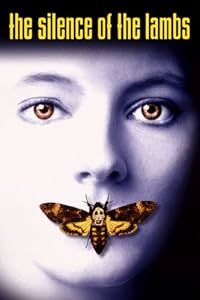


The use of enigma codes:

The opening of this movie features a woman running through some sort of misty woods, this makes you question yourself: who is she? why is she running? As she runs on, you then see her climb over part of an assault course which then answers one of the questions for you. You then see an FBI agent tell her that Mr Crawford wants to see her. You then ask yourself: who is Mr Crawford and what does he want? As she makes her way to see Mr Crawford, just before she passes through a lot of other agents and weapons, she walks past another women who high five's her, she says 'Hey Clarice'; this then gives the female a name as well as a personal link to her. This then makes you realise that she must also be an FBI agent. But you ask yourself: why are most of all the other agents male? She enters the office which shows a wall full of newspaper cuttings and other pieces of information, this makes you question yourself as to what the importance of the images/cuttings are, the scene ends a few seconds after.

The use of action codes:

When an agent asks the woman to see Mr Crawford, this is an action code. This changes the narrative and the direction of what would of happened. The lift scene could also be seen as an action code as it represents some of her characteristics of being a strong, independent women as she's in a lift full of men. If she had taken the stairs, things would've also been different; she may have missed Mr Crawford and we wouldn't have found out what he wanted. When she enters the lift full of other men, they're all wearing bold red uniforms where as she's wearing a pale blue uniform, there is also a huge difference in height. This emphasises the fact that she's an individual and that she stands out from the rest of the agents. Another action code used is the behavioural services sign as this reveals more about her location.

Production Scheldule

Saturday, 2 September 2017

Genre Research: Horror Thriller Conventions

Conventions of Horror Thrillers:


Conventions are the generally accepted ways of doing something.
There are general conventions in any medium, such as the use of interviewee quotes in a print article, but conventions are also genre specific. 
All genres of film have certain conventions which the audience will expect to see.

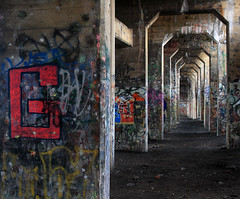
  • Secluded Location
Typically, horror/thriller films use a location where the protagonist is isolated. This is so no one is around to help them in the very well known disaster that is about to occur.

    • i.e. woods, house, ghost town.
Image result for secluded locations near meImage result for secluded locations near me house

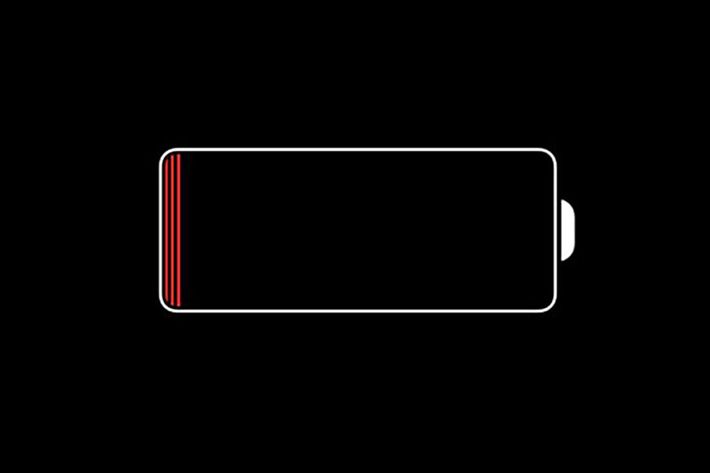
  • Phone Line Goes Down
The phone line commonly goes down during a horror/thriller. This takes away the ability for the protagonist to seek help.  Cannot call the police, hospital, friends, family etc. For a cellphone, this differs slightly in horror/thrillers, such as the phone signal disappearing or the battery of the phone to die.


Image result for phone battery diesImage result for phone line cuts out horror

  • Investigating A Strange Noise
Traditionally, the most overused and unbelievable horror convention. This is seen in probably most horror/thriller films. People have been dying all around you wherever you have been. Yet a noise occurs in an even more isolated location and the protagonist walks towards it. For some reason the actions of a normal human being would't be seen because it does not create the suspense a horror movie wants.


Related imageRelated image


  • Victims Linger Around Doors & Windows. 
  • Antagonist Pass By Doors & Windows

This is an old technique used up into today's horror/thriller films. The protagonist, aware of a 'killer' is looking or hiding from their antagonist, always yet to appear right in front of doors and windows. This then leaves them to be 'snatched'. Or the protagonist looks out of the windows and see's nothing, yet as they turn around the antagonist suddenly rushes past the window, leaving the protagonist vulnerable and unaware.

Related imageRelated image

  • Vehicle Won't Start
Just as the protagonist gets the chance to escape to enjoy safety or gain help, the vehicle does not work, shame. Horror/thriller films purposely use this type of conventions to create panic and show that the character is stuck and will not be able to escape and is inevitable to die.


Image result for vehicle doesnt start horrorImage result for vehicle doesnt start horror


  • Fake Scare


Fake scares have been used from the very start. The are used so much, maybe even overused. A fake scare can come in many different forms, from a door slamming, unknown phone ringing, unknown knock at door, friend jumping out, window, balloon pop, footsteps of animals or bird flies out etc.

Image result for shadowsImage result for phone unknown


Genre Research: Horror/Thriller Codes

Codes of Horror Thrillers:


Codes are systems of signs, which create meaning. Codes can be divided into two categories – technical and symbolic.

Technical codes are all the ways in which equipment is used to tell the story in a media text, for example the camera work in a film.

Symbolic codes show what is beneath the surface of what we see. For example, a character's actions show you how the character is feeling.

Some codes fit both categories – music for example, is both technical and symbolic.

Technical Codes:


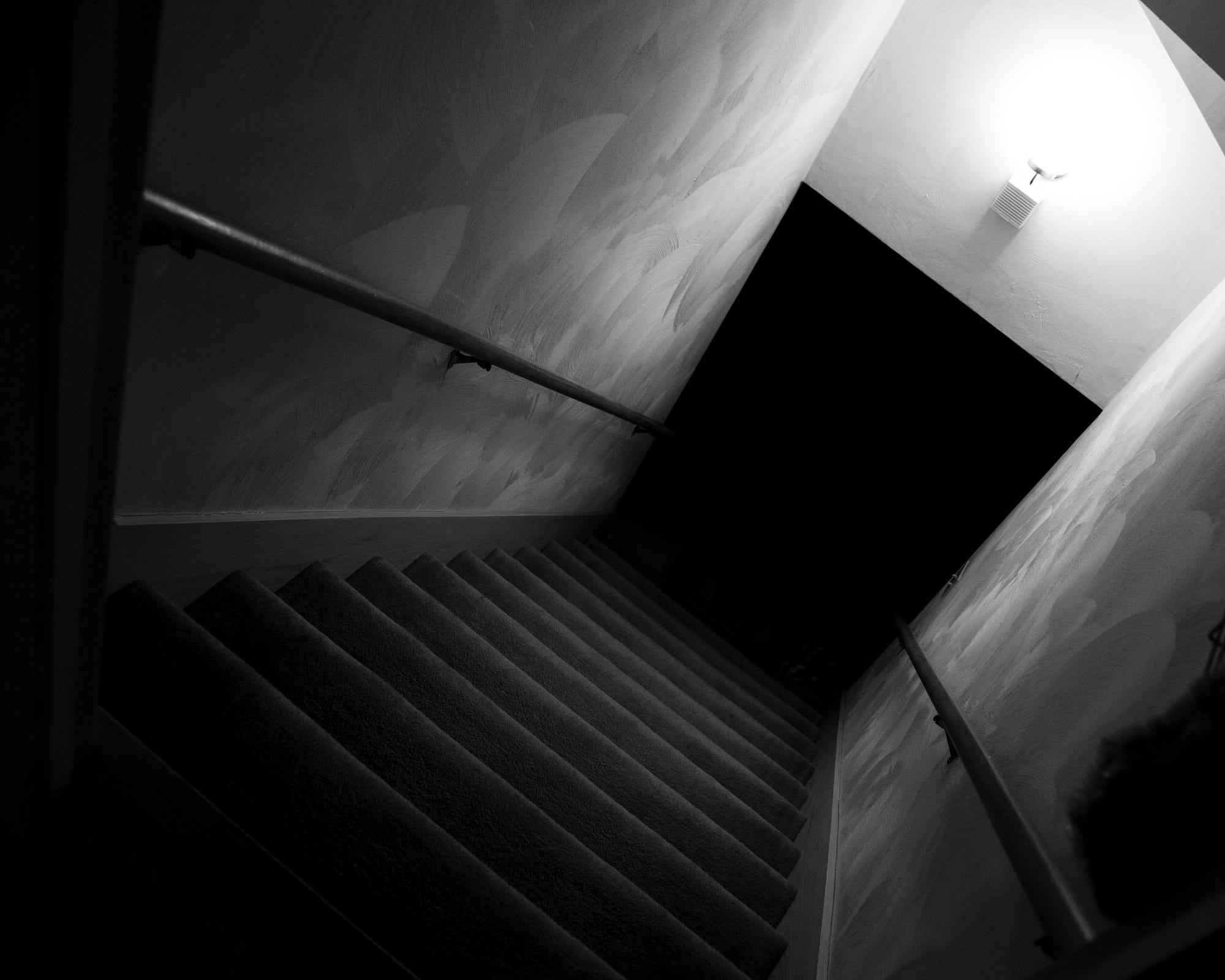
  • Canted Angles 
    • creates confusion and disorientation of character, making character vulnerable.
  • Tracking Shots (long)
    • creates suspense.
  • POV
    • creates a shaky shot, leaving us in the shoes of protagonist, feeling scared.
  • Focus
    • protagonist in foreground is clear whilst background is blurry, leaving audience frightened of unknown as cannot see movement clearly.
  • Extreme close-ups
    • shows emotions on face of characters, protagonist ear is shown, impacting on the audience's emotions.
  • Sudden Sounds
    • quiet scenes with a sudden sound to create a tension.
      • e.g. loud bangs, heartbeat (non-diegetic).
  • Pace of editing
    • Slow - creates tension as noting has happened for a while, therefore assuming something is about to occur.
    • Fast - increases heart beat. Gets audience on edge of seat, frightened.
Image result for close up horror thriller

Symbolic Codes:

  • Colours
    • Black - connotes death, evil, sense of unknown and/or darkness.
      • Audience takes in this factor and understand the purpose of black, therefore can understand it is a negative use, creating an unease.
    • Red - connotes blood, death, danger, murder etc.
      • Therefore, has been used again as audience can relate and understand it is a negative representation.
    • White - connotes purity and innocence.
      • Traditionally used for the protagonist, and typically female. Creates this sense of purity and that they are innocent leading to an inferior character.
  • Props
    • e.g. weapons
      • connotes violence and danger which eventually leads to death.
  • Character
    • actions
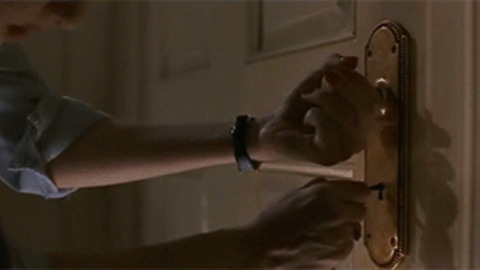
      • locking doors - shows scared, needs protection.
      • watching TV etc. - need distractions, shows frightened.


Image result for character locking door


    Friday, 1 September 2017

    History of Genre: Horror

    1920's


    The horror films in the 20's started of really Gothic.
    They had key features of male antagonist with the female victim. Real common stereotypes for the genre.


    1930's


    In these years the first talking horror film appeared - Dracula. The kept the same theme of the 20's, using locations that were very isolated. This was places such as castles.


    1940's


    World War 2 saw a huge decline in horror films. However, there was an uprise in the subgenre of comedy horror. This took interest of the public.


    1950's


    The first colour horror was scene in the 50's. There was also a huge amount of horror films and films in general that had invasion plots and other themes related to war due to the war just finishing. Large creatures like godzilla were in favour, in addition to 3-D gimmicks.

    1960's


    The 60's turn big creatures into something silly, and now was focus on human horror. This included films such as the Psycho. This was the start of 'real' horror instead of 'surreal' horror.


    1970's


    Children are scary! This was the rise of child antagonists. You could possibly link this with the fact the Thalidomide drug was the thing of the time. A drug given to pregnant women that made their children deformed. 

    1980's


    Technology has improved...SFX, effects, all that is now present. The gore horrors are now in fashion. This was due to that large increase to better sound, a massive impact in horror. Technology meant films looked better as well as more realistic too. Therefore, gore horrors were in fashion due to looking real.


    1990's


    Scream. The Silence of the Lambs. These psycho films are back! The fantasy, gore,vampires and zombies all gone, they are no longer favourites or simply scary for our horror watchers. The threat of real murders and genuine threat people can relate was what the fuss was about.

    2000's


    All type of horrors are present to be honest. The fashions of all years are coming back. However, in particular, the rise and fear of the unknown is what seems scary. Films such as paranormal activity and Let the Right One In are the hits now!

    Genre Theories

    Image result for steve neale genreSteve Neale:
    Theory of repititipon and differences.

    'Genres are instances of repition and differences'
     This theory means;
    • Does the film conform a genre's conventions and stereotype.
    • The film has to conform these conventions and stereotypes in order to be clasified as that genre.
    Or else;
    • Does the film subvert a genre's conventions and stereotype.
    • The film has to subvert the traditions of that genre enough to be classed as a unique film rather than a clone.


    Barry Kieth Grant:
    Sub-genres.

    Suggests sub-genres are used as more specific category and allows audiences to identify and recognise them by using familiar and what become recognisable characteristics.

    The way that the audience recognise and identify a specific category is through;
      Image result for barry keith grant
    • costume
    • setting
    • music
    • props
    • characters
    • narrative structure

    Examples;
    • A gun can be used as a prop to identify the sub-genre of hip hop, due to being a generic convention used in hip hop.
    • Characters such as superheroes e.g Thor, would become familiar that the genre is an action and the sub-genre is fantasy.
    • Suspense soundtrack as music can be used to identify that the sub-genre is a thriller.
    • A prop of a doll can be used in a horror film to identify the sub-genre of paranormal.